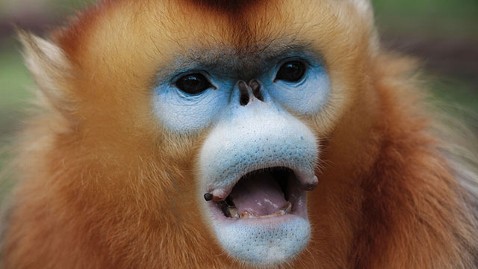
Snub-nosed monkeys are a unique species of monkey that come from a rare genus Rhinopithecus. This species of monkey grows to a length of 51-83 cm (20-33 in) with a tail of 55-97 cm (22-38 in). They have multicolored, long fur, especially on their shoulders and backs. They get their name from their short stump of a nose.
Snub-nosed monkeys originate in Asia. They inhabit mountain forests up to elevations of more than 4,000 m (13,000 ft) above sea level. During the winter, they migrate to more secluded regions with higher elevation that are more difficult for humans to access.
Source: Wikipedia - Snub-Nosed Monkey
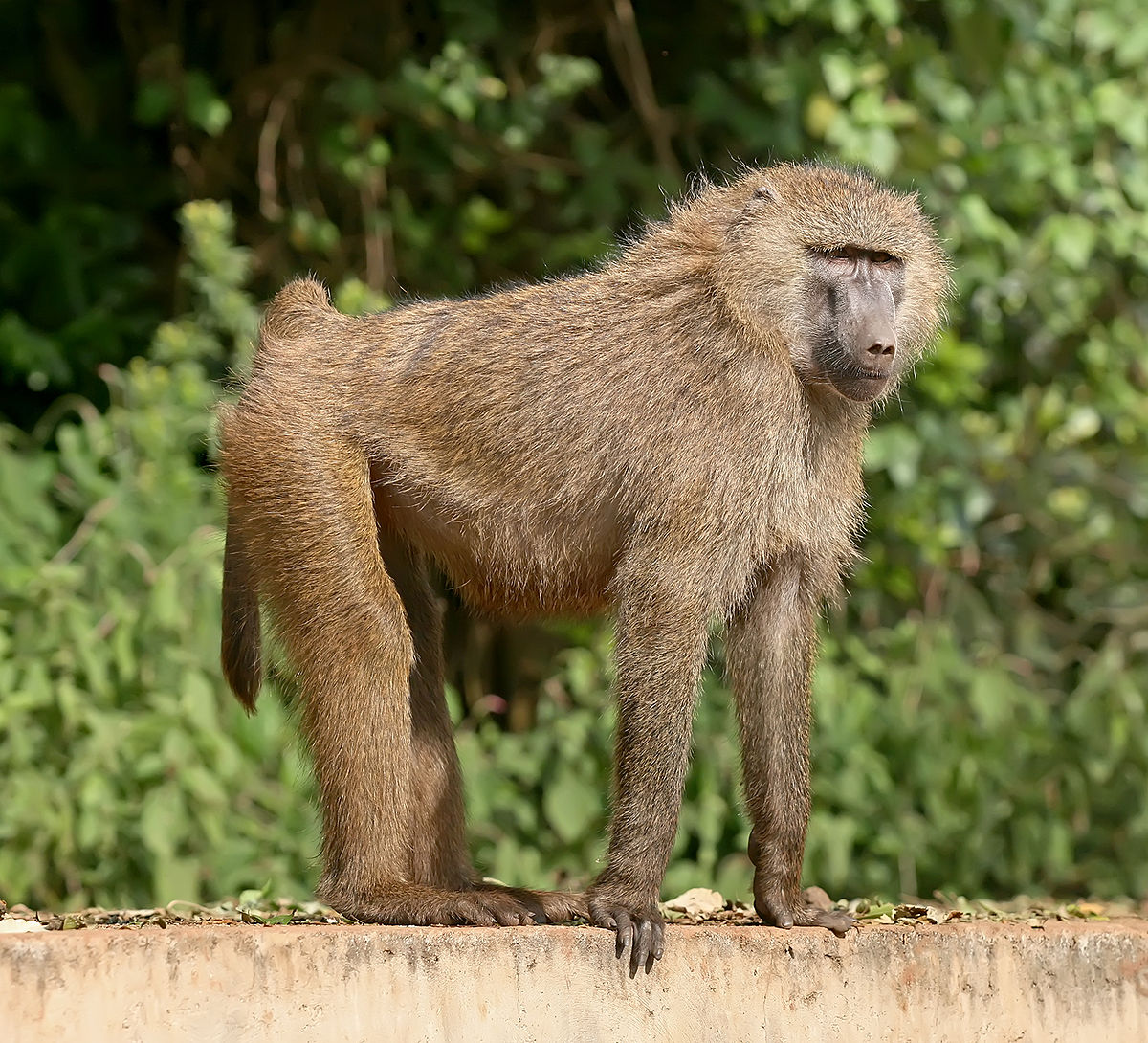
Chacma baboons, also known as cape baboons, are the largest of all monkeys, with an adult body length of 50 to 115 cm (20 to 45 in) and tail length of 45 to 84 cm (18 to 33 in). It also one of the heaviest, with males weighing 21 to 45 kg (46 to 99 lbs). Adult male Chacma baboons can in some instances be about twice as long and three times as heavy as adult females. It is similar in size to the olive baboon, averaging slightly higher in body mass, and of more similar weight to the mandrill.
Chacma baboons are mainly located in southern Africa and have a variety of social behaviors, including dominance, collective foraging, female adoption of cubs, and friendship pairing. These behaviors form part of a complex evolutionary ecology. The species is not threatened, but population pressure has increased the contact between humans and baboons. Hunting, trapping and accidents kill or remove many baboons from the wild, reducing the number of baboons and destroying their social structure.
Source: Wikipedia - Chacma Baboon
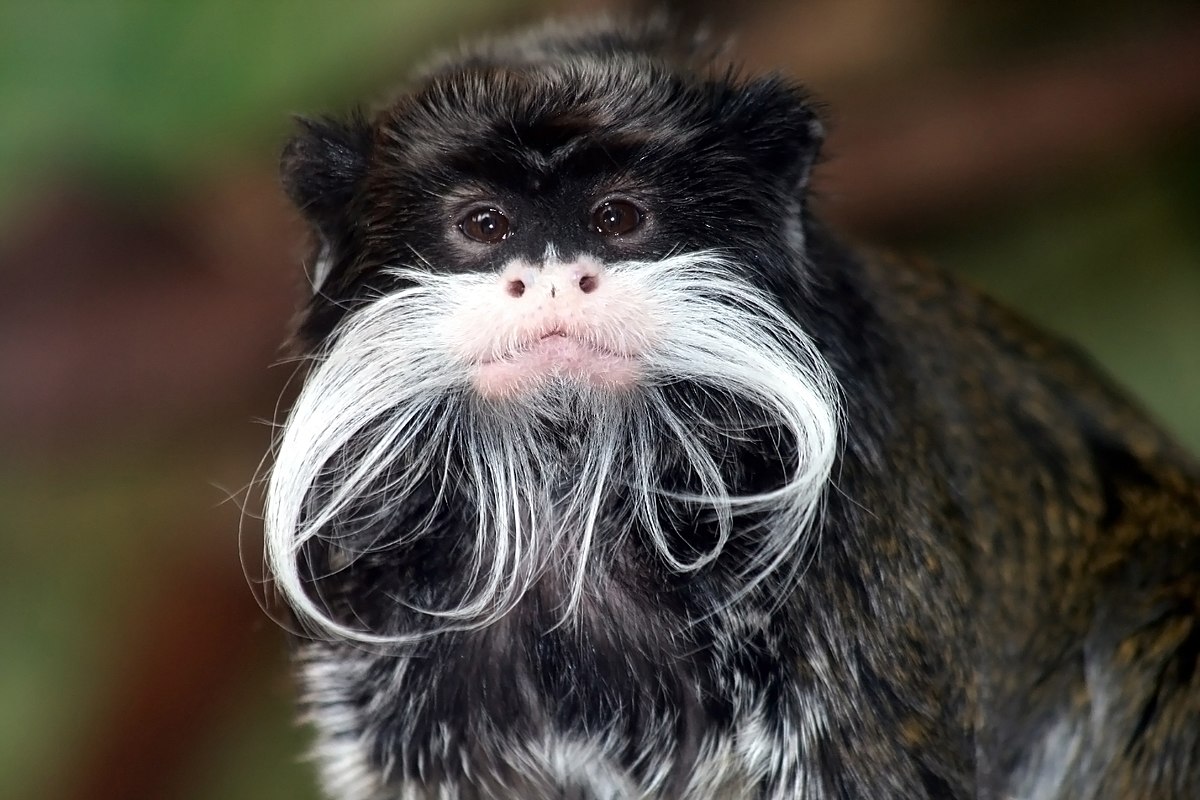
The emperor tamarin is a species of tamarin allegedly named for its resemblance to the German emperor Wilhelm II. The fur of the emperor tamarin is mainly gray, with yellow spots on the chest. The hands and feet are black, and the tail is brown. What mostly stands out is its long, white beard, which extends to the sides beyond the shoulders. Emperor tamarins have a body length of 23-26 cm (9-10 in), plus a long tail of about 35-42 cm (14-16 in). The average emperor tamarin weighs at about 500 gramps (18 ounces).
It lives in the southwestern Amazon basin, eastern Peru, northern Bolivia, and in the west Brazillian states of Acre and Amazonas, mostly in lowlands and lower mountain rain forests that are considered tropical and moist with an abundance of vegetation.
Source: Wikipedia - Emperor Tamarin
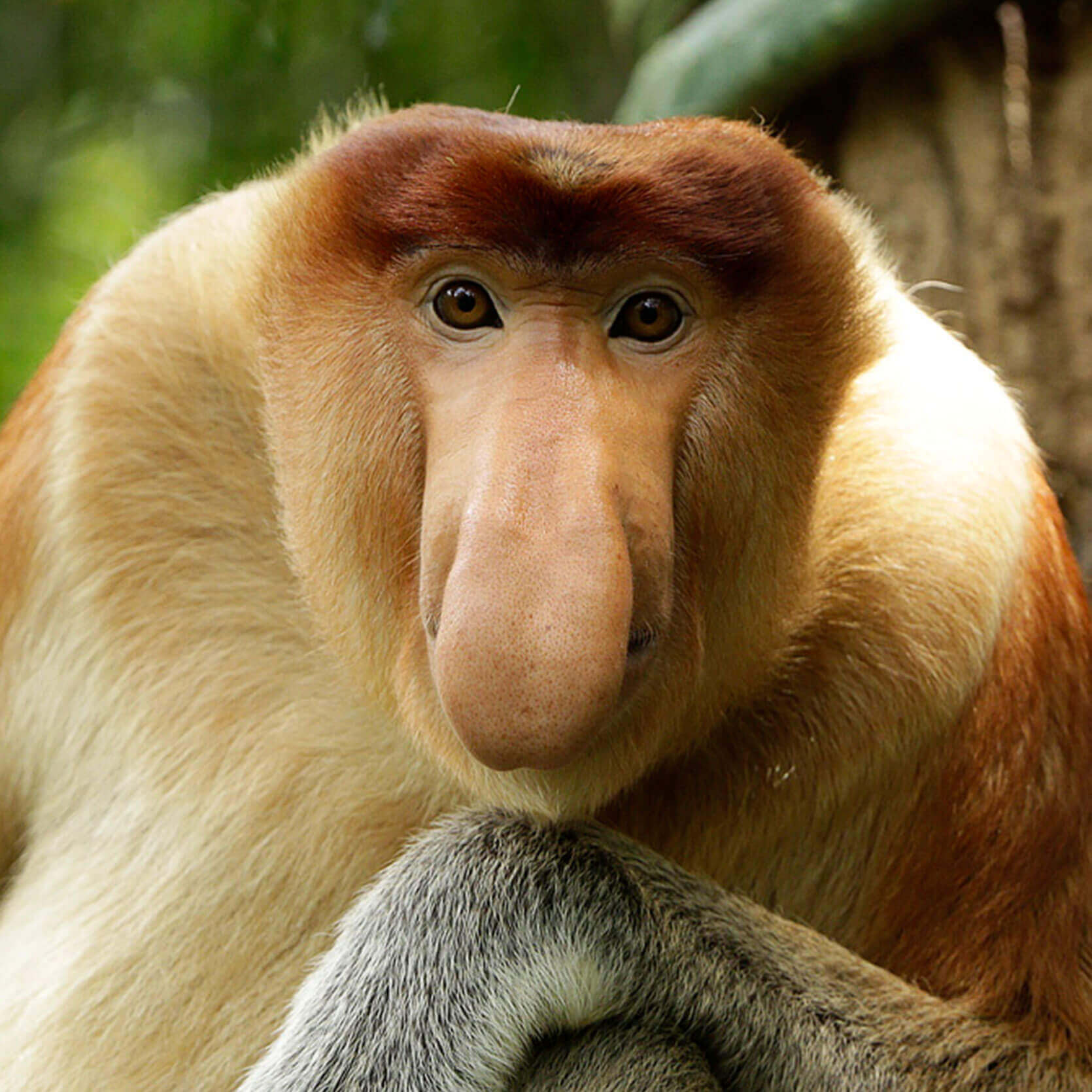
The proboscis monkey or long-nosed monkey is a large species, being one of the biggest monkey species native to Asia, with males having a head-body length of 66-76 cm (26-30 in) and normally weigh 16 to 22.5 kg (35 to 50 lbs). Male proboscis monkeys have a large nose, which can grow to 10.2 cm (4 in) in length, and hangs lower than the mouth. The proboscis monkey has a long coat; the fur on the back is bright orange, reddish brown, yellowish brown, or brick red. The underfur is light-grey, yellowish, or greyish to light-orange.
This species of monkey is endemic to the island of Borneo and can be found on all three nations that divide the island: Brunei, Indonesia, and Malaysia. It is most common on costal areas and along rivers. The proboscis monkey can be found in swamp forests, cliffs, rubber forests, and other environments within at least a kilometer from a water source. This species of monkey is the most aquatic of the primates and is a good swimmer, capable of swimming up to 20 m (66 ft) underwater. It is known to swim across rivers.
Source: Wikipedia - Proboscis Monkey
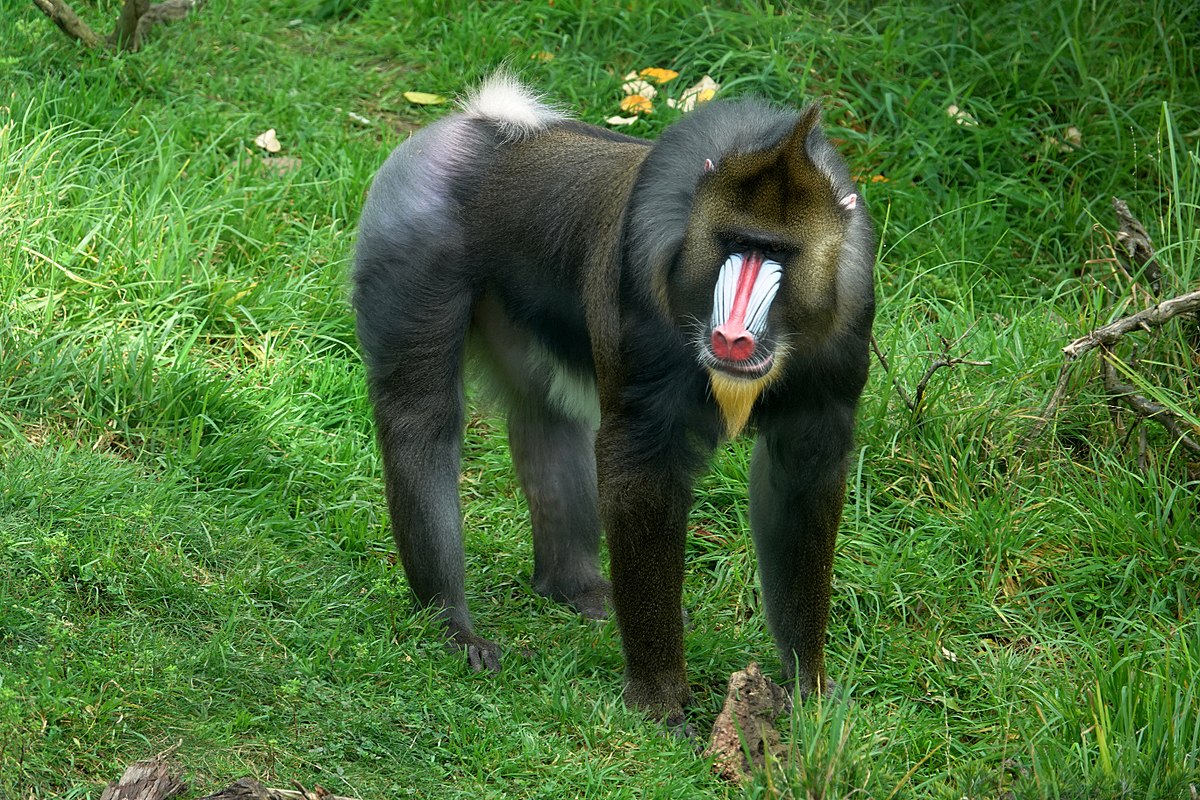
The mandrill has an olive green or dark grey coat with yellow and black bands and a white belly. Its hairless face has a enlongated muzzle with a red stripe down the middle and protruding blue ridges on the sides. It also has red nostrils and lips, a yellow beard, and white tufts. The average male mandrill is 75-95 cm (30-37 in) long and the female is 55-66 cm (22-26 in), with the short tail adding another 5-10 cm (2-4 in).
Mandrills are mostly found in southern Cameron, Equatorial Guinea, Congo, and Gabon. Their range may include Nigeria. Mandrills live in tropical rainforests. They also prefer to live in gallery forests, adjacent to savannas, as well as rocky forests, riparian forests, cultivated areas and flooded forests.
Source: Wikipedia - Mandrill
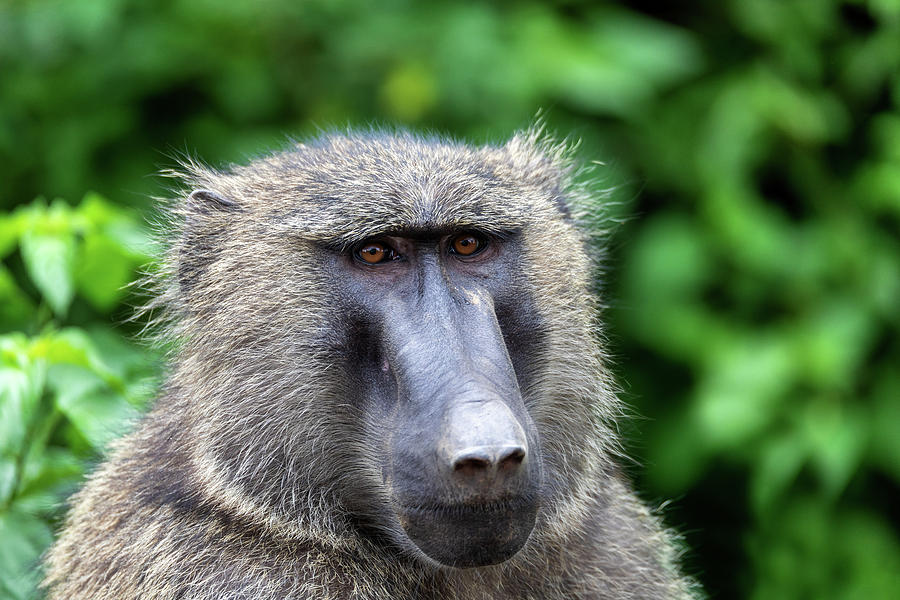
The olive baboon also called the Anubis baboon is named for it's coat which, when seen at a distance, is a shade of green-gray. Its alternative name, Anubis baboon, comes from the Egyptian god Anubis who was often represented by a dog head resembling the dog-like muzzle of the baboon.
The olive baboon is the most wide ranging species of all baboons, being found in 25 countries throughout Africa, extending from Mali eastward to Ethiopia and Tazania. It can be found in several different habitats. It normally lives in the wide plains of grasslands, but the baboon also inhabits rainforests and deserts.
Source: Wikipedia - Olive Baboon